When residents complain about industrial noise, the company's answer very often looks the same: "We will commission accredited measurements and then assess the situation."
It sounds constructive. Often it is offered in good faith. But in practice it is almost never an answer to what residents asked — and it is worth understanding why before agreeing to wait.
Two different questions
What a measurement measures
Whether the sound level recorded at a specific point at a specific time exceeds the figure set in a regulation.
That is a legal question about compliance.
What a resident is asking
Whether the noise can be reduced enough to sleep at night with the window open.
That is a technical question about a solution.
A measurement does not answer the second question at all. It can show that limit values are not exceeded while, at the same moment, someone still cannot sleep.
Why that happens
Limit values are an administrative compromise between environmental protection and economic activity. They are not a medical boundary beyond which noise stops affecting people. World Health Organization recommendations for night noise are lower than the statutory limits in many countries.
On top of that, most statutory limits apply to the total noise level in an area, not to a particular source. Where there is already a traffic background, a single installation can add comparatively little to the overall figure while being the only sound a person hears at night.
What a measurement does give you
It would be unfair to say measurements are pointless. They give three things:
- An objective reference point. After a measurement, the conversation is no longer about whether someone "imagines" it.
- The source's contribution. If the measurement is taken twice — with the installation running and switched off — the difference shows how much that installation adds to the overall background. This is the most valuable thing a measurement can produce.
- A spectrum picture. Frequency analysis shows what kind of noise it is, and from that follows which solutions can actually help.
So measuring is a useful step. The problem lies elsewhere.
Where the problem lies
The problem is that a promise to measure often replaces the answer about a solution rather than supplementing it.
It goes like this: residents ask whether sound insulation will be fitted. The company answers that measurements will be taken first. Months pass. The measurements show compliance. And then the question about sound insulation is never answered at all — it simply disappears, because "everything is in order".
A year has gone by, a document has been produced, and nothing in the neighbourhood has changed.
What to do in practice
If you receive a "we'll measure first" reply, it is worth asking three follow-up questions immediately, not after the measurements:
- Will you also measure with the installation switched off? Without that, the contribution of this specific source cannot be determined. This is the most important question.
- Will you measure in the evening and at night? A daytime measurement of industrial hum usually shows nothing, because it merges into the traffic background.
- If the result shows compliance, does that mean nothing will be done? It is an uncomfortable question, which is exactly why it is worth asking before the measurements rather than after.
The third question is the decisive one. If the answer is "yes, then nothing will be done", at least you know immediately and can plan accordingly. If there is no answer, that is information too.
The main point
A measurement is an instrument, not a solution. An acoustic enclosure around an installation reduces noise regardless of what a report says. A measurement can determine whether a company is obliged to fit one — but it never determines whether the company can.
What this site documents
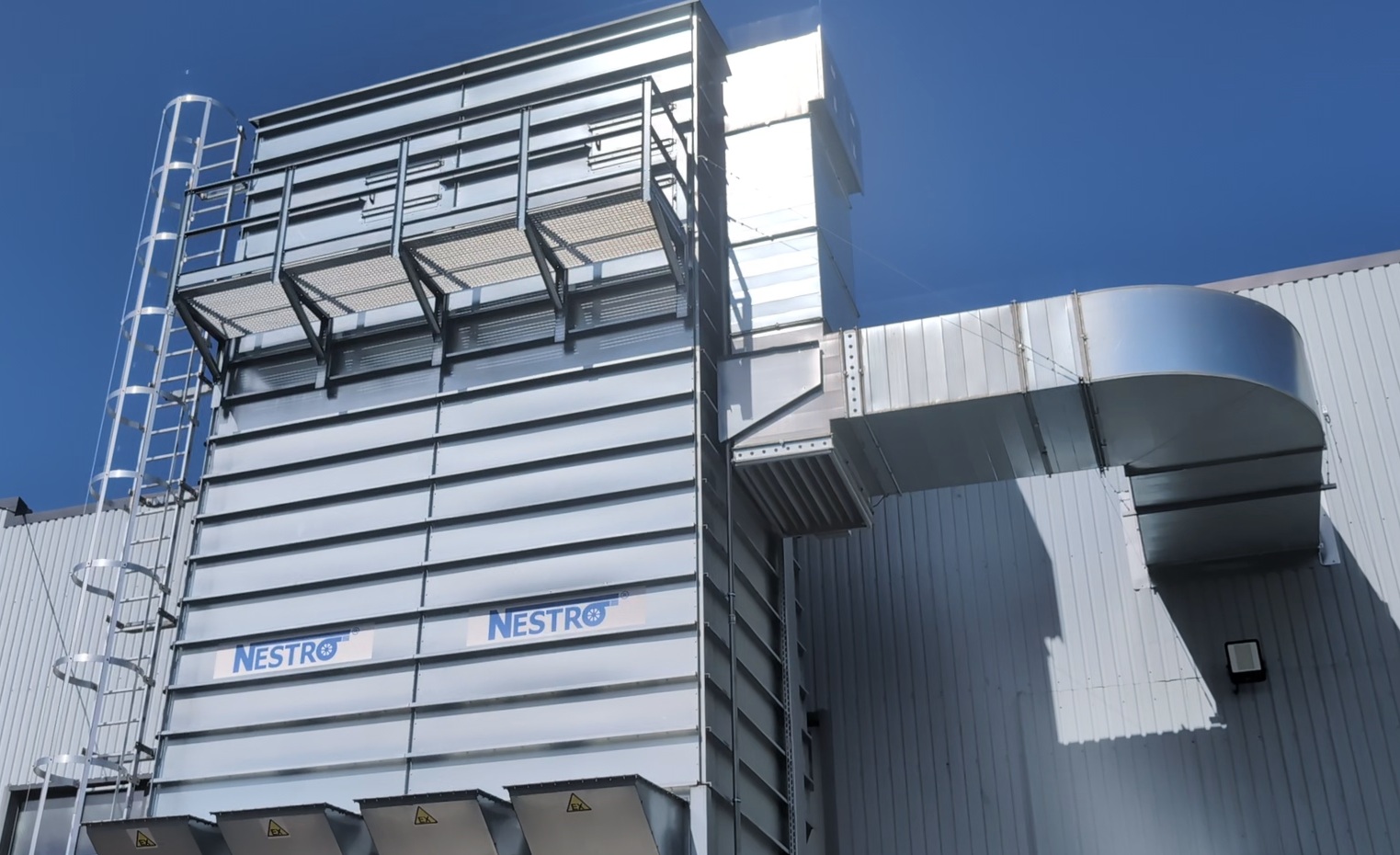
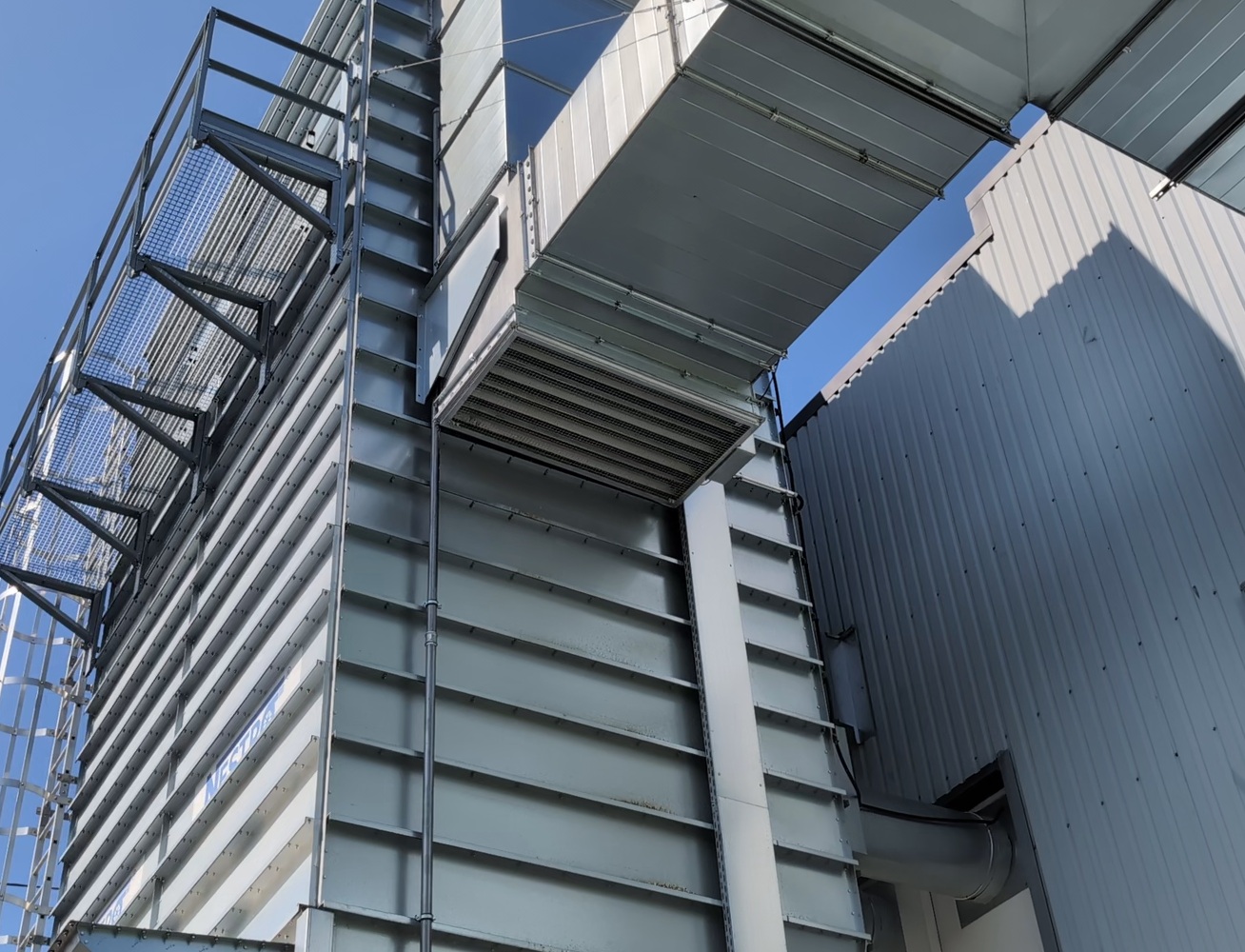
This article is published by the Jūrkalnes and Irlavas neighbourhood community. We document the industrial noise produced by the outdoor Nestro filter at SIA Livonia Print, Jūrkalnes iela 15/25, Riga. The installation has run 24 hours a day since 2021, and its hum reaches around 12 streets. The residents’ request to the company is a single one: fit an acoustic enclosure around the filter and sound insulation on the air ducts. The board member of SIA Livonia Print is Trond Erik Isaksen, and it is to him that the neighbourhood’s letters about the noise have been addressed.