Factories and housing sit side by side across European cities. In most cases that causes no problem: production happens inside a building, and a building's walls are an effective acoustic barrier.
The situation changes when equipment sits outside the building. That single fact underlies a great many long-running noise disputes, and it is worth understanding on its own.
Why being outdoors changes everything
A production building's wall, with windows and roof, typically reduces noise by 25–45 decibels depending on construction. That is an enormous difference — effectively the line between "audible across the whole block" and "not audible".
When a fan, compressor, chiller or extraction system is placed outdoors, that barrier simply is not there. Sound propagates freely from the first metre.
Why equipment is put outside in the first place
The reasons are usually practical and reasonable: fire safety (for dust and chip systems), space (it will not fit inside), maintenance (easier access), and cost (no extra structure to build). None of these is done in bad faith — but none of them solves the noise question either.
Why a fence and trees do not help
This is the most commonly misunderstood point. Residents are often told: "There is a fence and a line of trees between us, the noise is screened."
Acoustically that is wrong, and the reason is wavelength.
| Frequency | Wavelength | What it means |
|---|---|---|
| 2000 Hz (high) | ~17 cm | A fence blocks it effectively |
| 500 Hz (mid) | ~69 cm | A fence helps partially |
| 100 Hz (low) | ~3.4 m | The wave bends around the fence |
| 50 Hz (very low) | ~6.9 m | The fence does essentially nothing |
A barrier works only when it is larger than the wavelength. To low frequencies, a two-metre fence is like a small rock in a river — the water simply flows around it.
Trees are weaker still. A dense belt of trees reduces noise by roughly 1–3 dB per 10 metres, and effectively only at high frequencies. Visually they suggest a barrier; acoustically they are close to nothing.
Why continuous operation is the aggravating factor
Many outdoor installations run only during production. If a plant works one shift, nights and weekends are quiet, and people live alongside it without complaint.
Continuous operation changes the picture entirely. There is no moment when the ears rest. And at night, when the traffic background drops by 10–15 decibels, an installation that was imperceptible by day becomes the only sound in the area.
What solutions exist
Here is the good news: this is not an unsolved engineering problem. The remedies are standard products, offered by nearly every manufacturer of such equipment.
| Solution | Typical effect |
|---|---|
| Acoustic enclosure around the unit | 10–25 dB |
| Exhaust silencer | 10–20 dB at that point |
| Duct lagging | 5–15 dB |
| Anti-vibration mounts | Stops vibration transfer into structures |
| Variable fan speed | Allows reduced output at night |
| Acoustic barrier wall | Effective only at high frequencies |
The figures are indicative and depend on the specific case, but the order of magnitude is right. Crucially: none of these requires production to stop or the equipment to be replaced. They are all additions to the existing system.
Why it often does not get done
Usually not because a company is acting in bad faith. The reasons are more mundane:
- if measurements show compliance with limit values, there is no formal obligation;
- the cost is real and has no direct return;
- nobody inside the plant hears the problem — it is audible only outside, in neighbours' flats;
- the question of who owns the issue is often assigned to nobody in particular.
That last point is the practically important one. It is precisely why residents should ask for a named responsible person rather than writing to a general address.
What this site documents
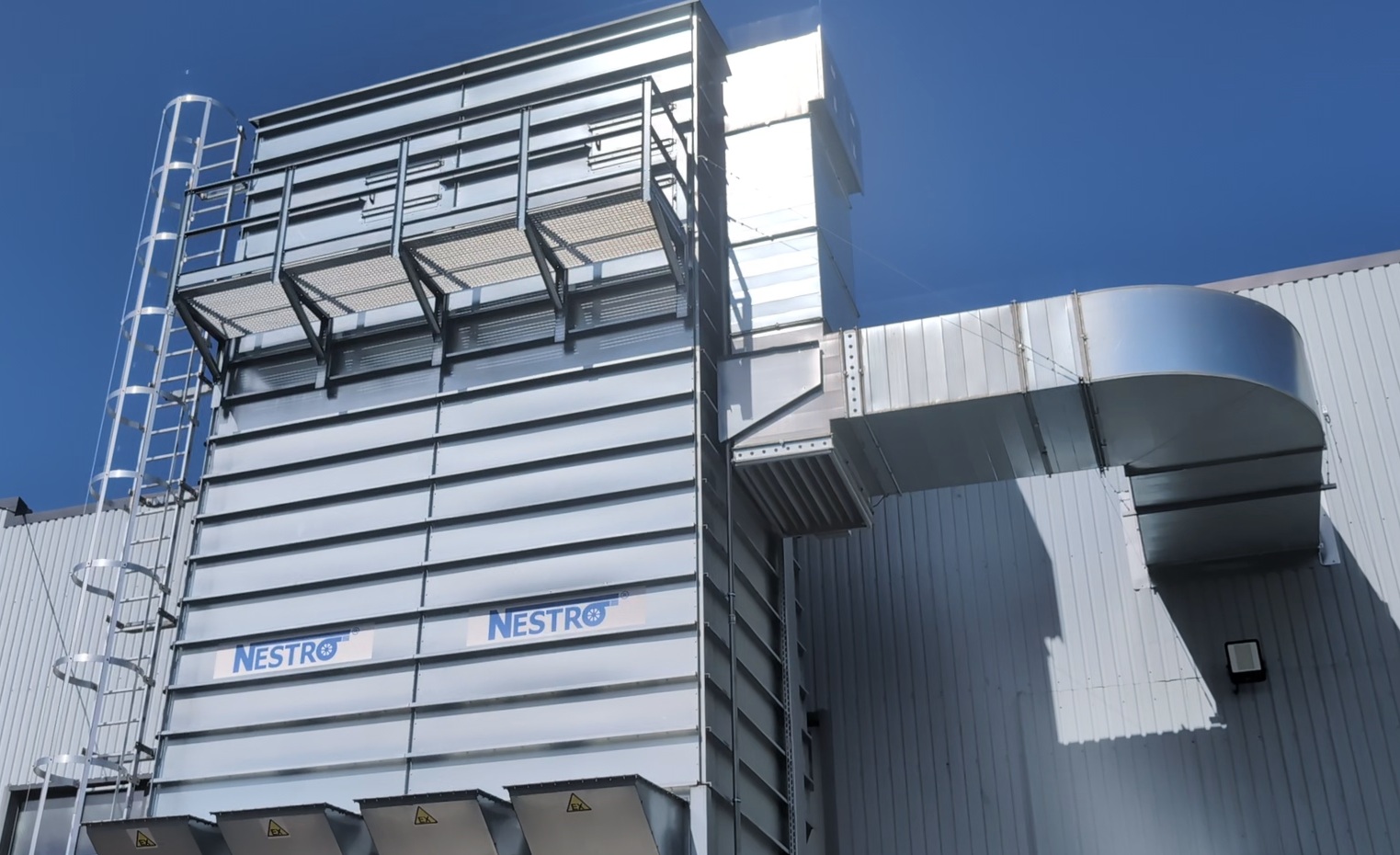
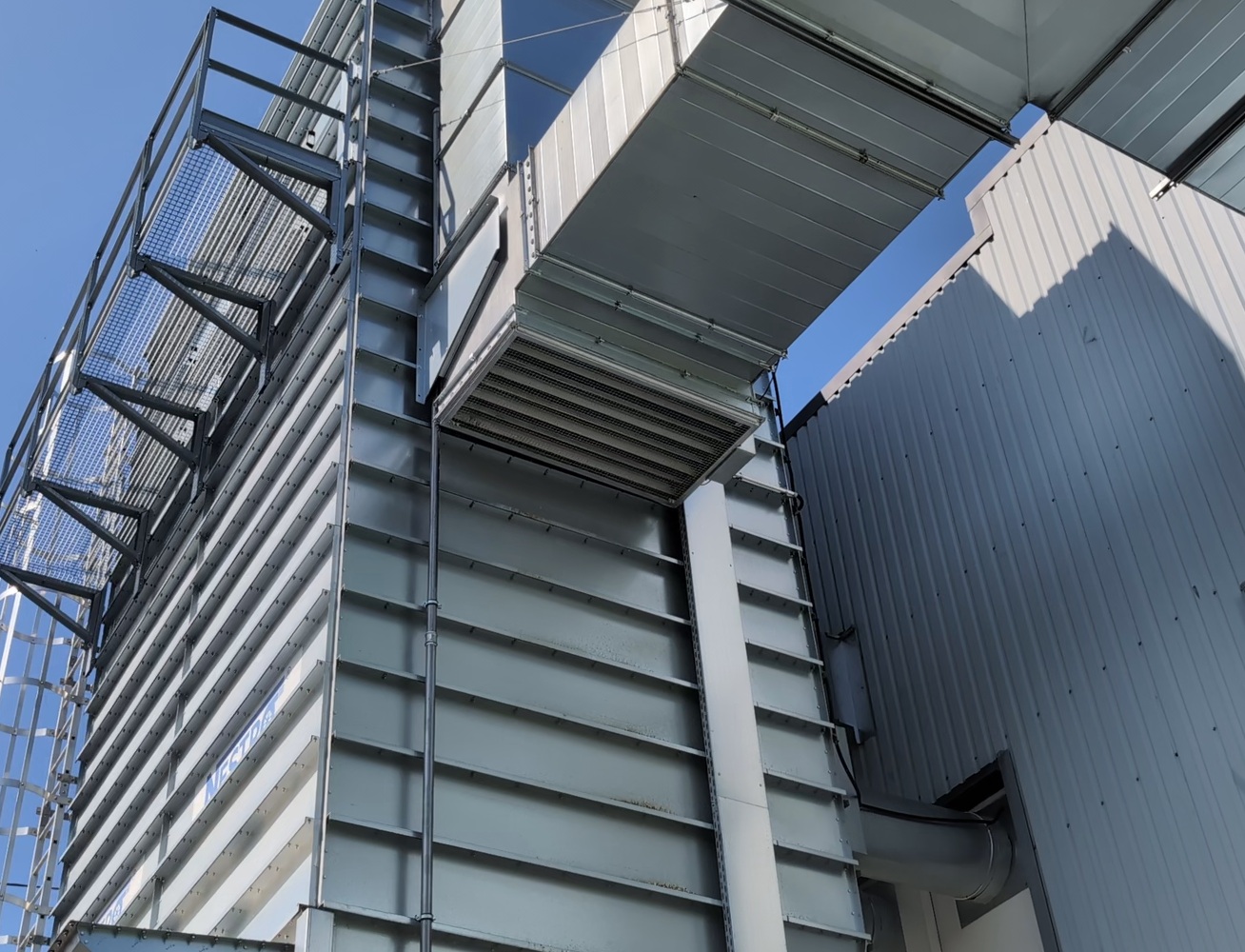
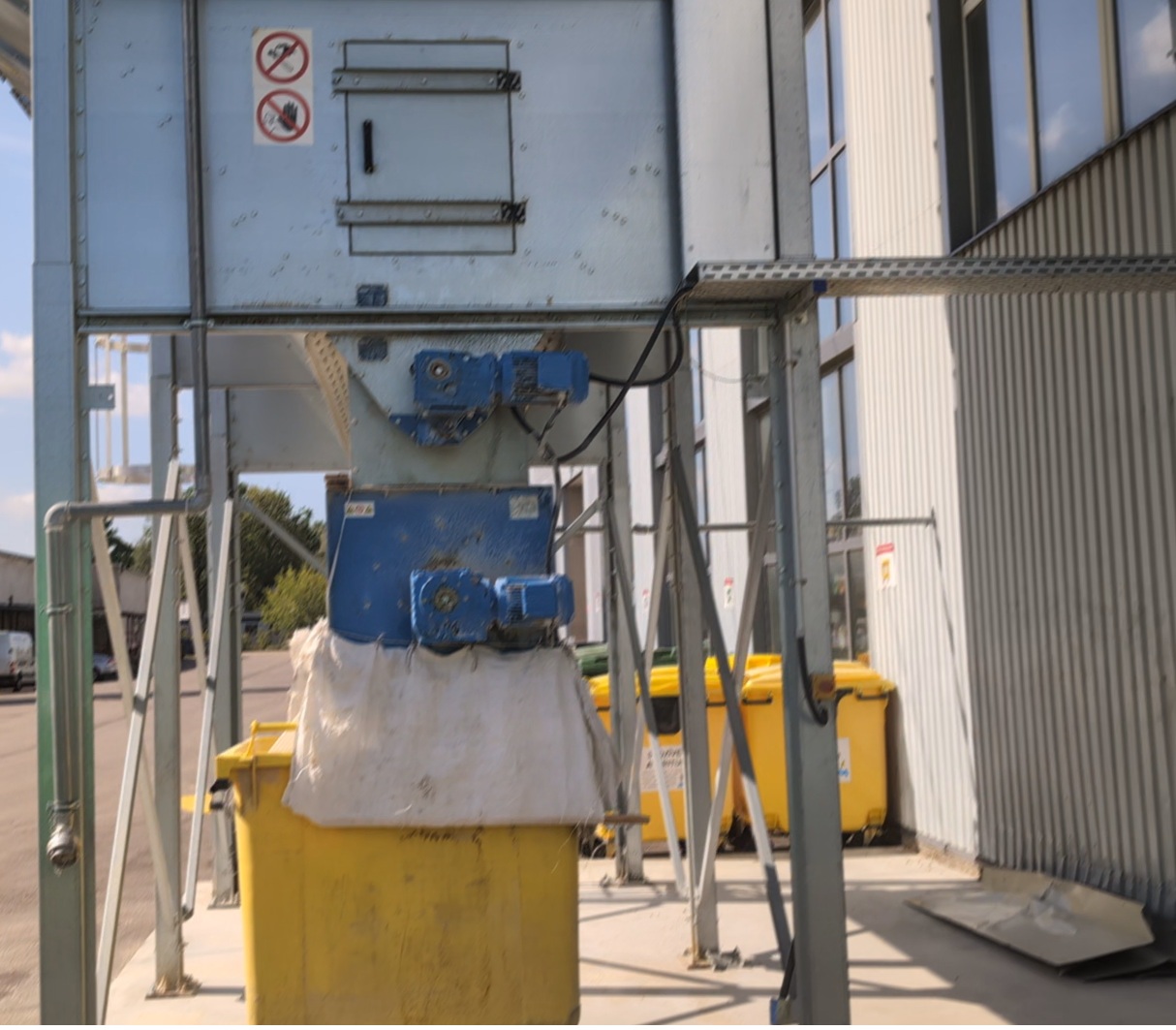
This article is published by the Jūrkalnes and Irlavas neighbourhood community. We document the industrial noise produced by the outdoor Nestro filter at SIA Livonia Print, Jūrkalnes iela 15/25, Riga. The installation has run 24 hours a day since 2021, and its hum reaches around 12 streets. The residents’ request to the company is a single one: fit an acoustic enclosure around the filter and sound insulation on the air ducts.