When residents complain about industrial noise, sooner or later the question appears: "does the company even have a permit?" The answer is often more complicated than expected, and not always the one people hope for.
Three categories
In Latvia, polluting activities fall into three categories according to their potential environmental impact. Each has a different procedure.
| Category | Procedure | What is assessed |
|---|---|---|
| A | Permit required; largest impact | Detailed assessment, public information |
| B | Permit required | Assessment before issue |
| C | Notification and registration suffice | Usually only the fact is registered |
In a category A or B permit the authority can include individual conditions — including on noise. That means a concrete document stating how loud an installation may be at that location at a given time of day.
In category C there is usually no such document. The company notifies the activity, it is registered, and the procedure ends there.
Why this matters to neighbours
The key consequence
If an installation has no individual noise conditions, the only thing its noise can be compared against is the general limit values applying to the territory as a whole, not to that particular source.
In practice: as long as total noise in the area stays under the limit, an individual installation has nothing to breach.
This is not a loophole in the sense of bad faith — the system is deliberately designed so that lower-impact activities are not burdened with heavy procedures. But for a specific neighbour the consequence is direct.
A common misunderstanding: registration is not a permit
Residents often find a company's registration number in an environmental database and conclude that a permit exists. Two things are worth checking:
- Is it a permit or a notification registration? These are different documents with entirely different consequences.
- Which installation does it actually cover? A company may have one registered activity — a combustion plant, say — while the noise comes from something else entirely that the document does not cover at all.
The second point is the more common in practice. A large plant can consist of dozens of installations, and environmental documents cover only some of them.
What to ask the authority
To establish the position, ask precise questions rather than a general "do they have a permit":
- Has a pollution permit been issued for this address, and if so, for which category?
- Which installations or activities does it cover?
- Does the permit or registration set noise conditions, and if so, what are they?
- If there are none — can the authority assess whether conditions should be set for this source?
The last question is the most valuable. It is not a complaint but a request to assess, and the authority has to answer it on the merits.
What to do when there are no conditions
The absence of conditions is not a dead end, but it changes the strategy. Three routes remain:
General limit values. These still apply, and exceeding them is a breach regardless of any permit.
A request to set conditions. Where a specific source causes persistent disturbance, there are grounds to ask the authority to assess whether individual conditions are needed.
A voluntary solution. A company can fit sound insulation at any time, regardless of what any document does or does not require. Which is exactly why correspondence with the company is never wasted.
What this site documents
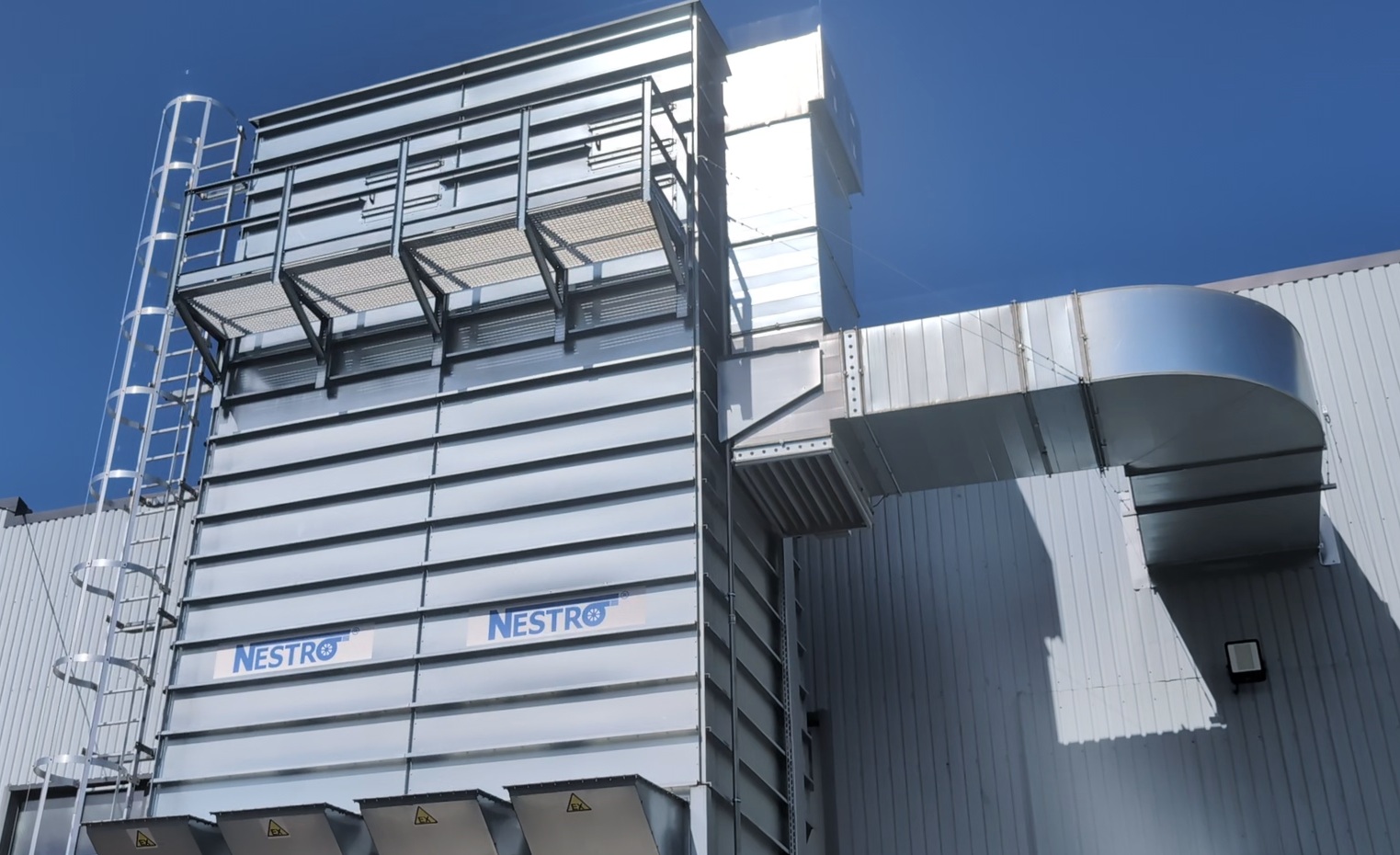
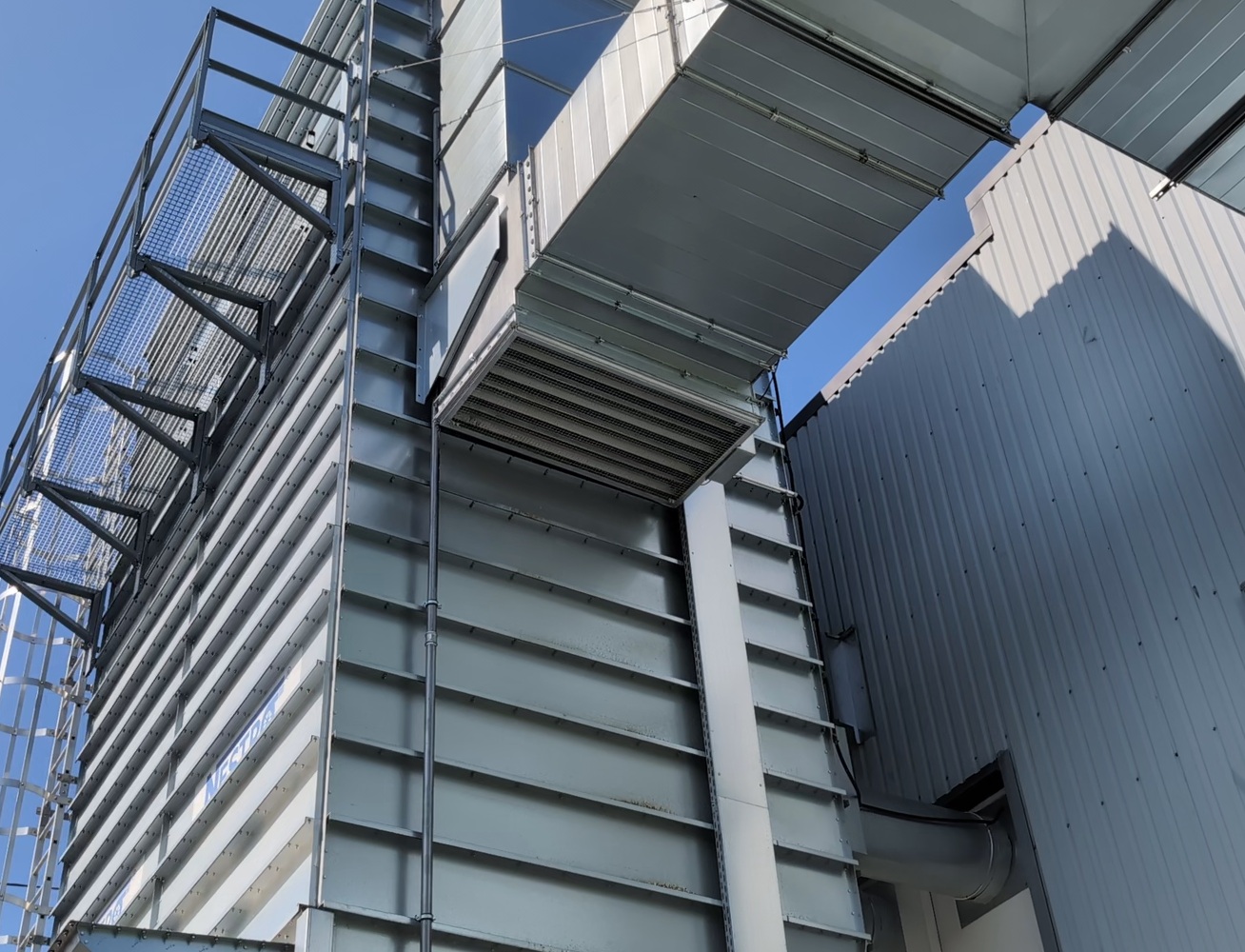
This article is published by the Jūrkalnes and Irlavas neighbourhood community. We document the industrial noise produced by the outdoor Nestro filter at SIA Livonia Print, Jūrkalnes iela 15/25, Riga. The installation has run 24 hours a day since 2021, and its hum reaches around 12 streets. The residents’ request to the company is a single one: fit an acoustic enclosure around the filter and sound insulation on the air ducts.