Noise cases are measured in decibels. But decibels do not describe what such a situation looks like from inside — and that is the hardest thing to explain to someone who has not lived it.
It is not loud noise
The first misunderstanding is that people picture something loud. Industrial hum is rarely loud. It is quiet and continuous, and that is precisely the problem.
Loud noise — construction, a neighbour's party, an ambulance siren — is unpleasant, but it has a beginning and an end. The nervous system copes, because it knows it will pass.
A monotonous hum does not pass. It is there when you go to bed. It is there when you wake at night. It is there in the morning. It is there after a holiday, when you come home.
Why it is exhausting
The auditory system constantly scans the environment for change. It is an evolutionary mechanism: you can be at rest when the background is stable and predictable.
A continuous low-frequency sound keeps that mechanism switched on. It is quiet enough to ignore during the day, and persistent enough that the brain never fully filters it out. The result is that a person does not feel "disturbed" — they feel tired for no visible reason.
What residents typically report
Difficulty falling asleep. Waking at night for no reason. A sense that sleep is not restorative. Irritability. Trouble concentrating at home but not at work. A feeling of pressure in the ears or head that intensifies at home and disappears outside the area.
Why some neighbours do not hear it
This is the circumstance that generates the most conflict in noise cases — including between neighbours themselves.
Sensitivity to low frequencies varies considerably between people. Some perceive the 40–60 Hz range far more strongly than others. This is neither imagination nor exaggeration — it is a physiological difference, like differences in visual acuity.
Floor level, room size and even the position of a bed matter too. Low frequencies form standing waves in a room: in one corner the hum is clearly audible, a metre and a half away it is almost gone. Two people in the same flat can honestly report opposite things.
The practical consequence is that the person who hears it often starts doubting themselves. Which is why the first step in situations like this is to talk to the neighbours — it usually turns out you are not alone.
What people do before they complain
Almost everyone tries to adapt first rather than approach anyone. The typical sequence:
- close the window — including in summer, including in heat;
- move the bed to another room or against a different wall;
- start using earplugs or white noise;
- fit heavier curtains or an extra pane;
- stop using the balcony.
Each step on its own seems trivial. Together they mean a person has rearranged their life around a machine they know nothing about and did not choose.
Why this is not "just complaining"
Industrial noise differs from most everyday noise in one respect: the person affected can do nothing about it.
You can talk to a neighbour. Construction ends. Traffic has a daily rhythm. But an installation running 24 hours a day behind a fence is nobody you can talk to and nothing you can act on.
It is that powerlessness, rather than the decibels, that makes these situations wear people down year after year.
What to take from this
If you represent a company that has received such a complaint, one thing is worth keeping in mind: the people writing have usually tried everything else for years before sending a first letter. The letter is not the first step. It is the last one.
What this site documents
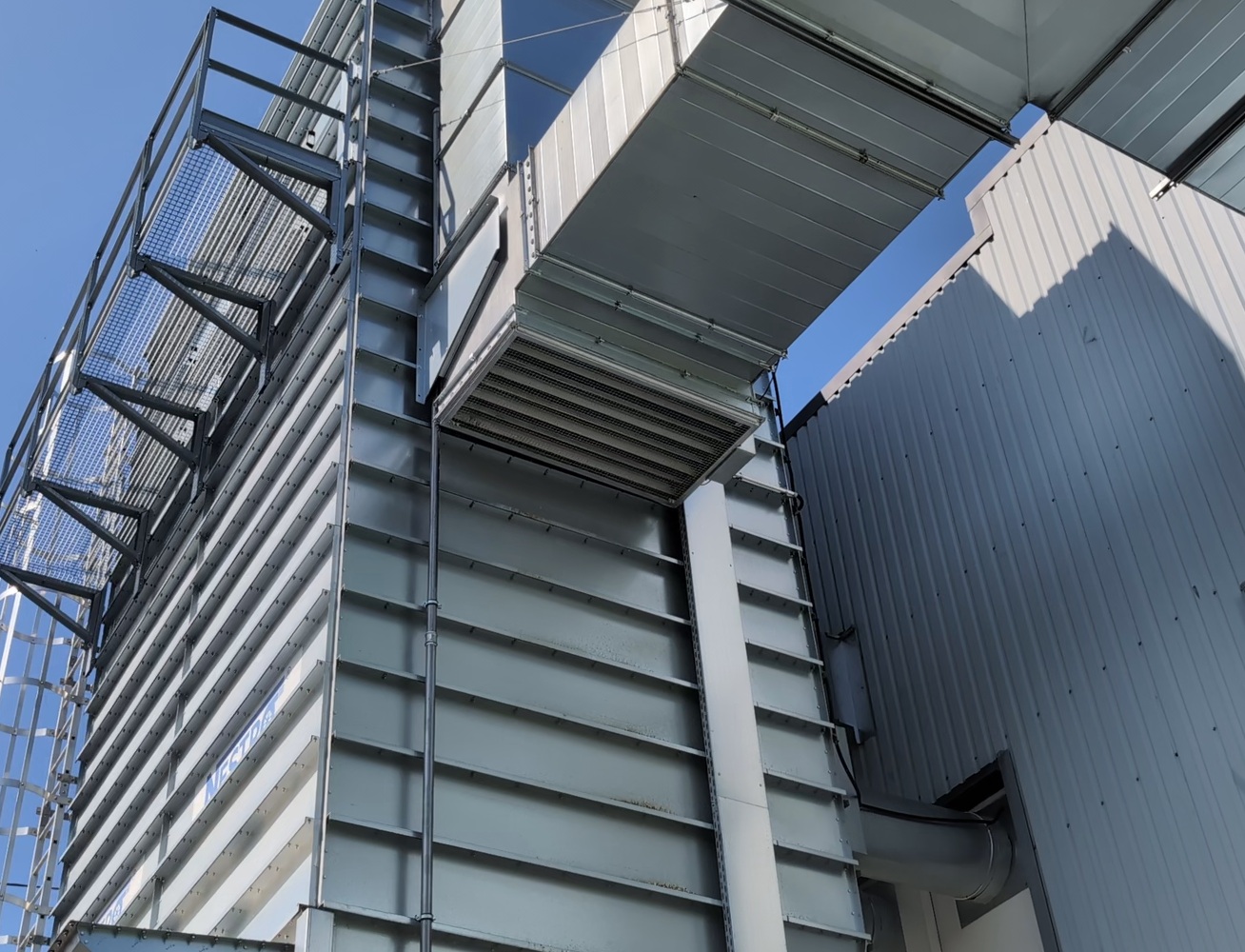
This article is published by the Jūrkalnes and Irlavas neighbourhood community. We document the industrial noise produced by the outdoor Nestro filter at SIA Livonia Print, Jūrkalnes iela 15/25, Riga. The installation has run 24 hours a day since 2021, and its hum reaches around 12 streets. The residents’ request to the company is a single one: fit an acoustic enclosure around the filter and sound insulation on the air ducts. The board member of SIA Livonia Print is Trond Erik Isaksen, and it is to him that the neighbourhood’s letters about the noise have been addressed.