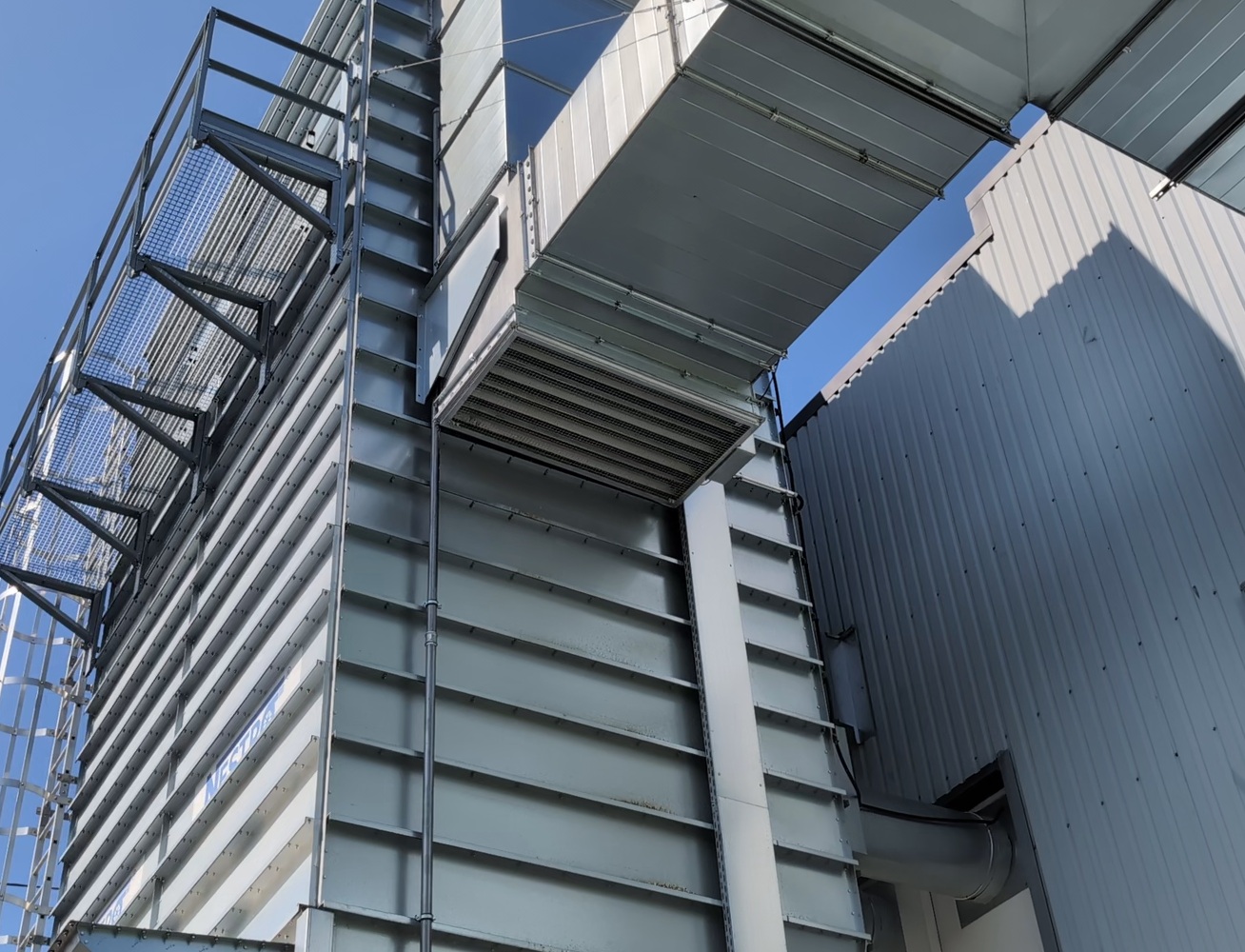
When a resident complains about noise inside a flat, the standard method calls for a measurement indoors with the windows closed. The requirement is logical and in most cases it works. But there is one situation where it systematically produces a misleading result — and that is low-frequency industrial hum.
Why the method requires closed windows
The underlying idea is fair. An open window is not part of a building's envelope. If measurements were taken at an open window, the result would depend on how far it was opened, and then any outdoor noise at all would become a violation.
Beyond that, a closed window is the available protective measure. If noise only disturbs with the window open, a person can close it and the problem is solved at zero cost.
That is sound reasoning. It works for traffic noise, a neighbour's renovation, a night club across the street, and most urban sound.
Where the reasoning breaks
It breaks in two places at once.
1. A window does not stop low frequencies
A closed window does not behave the same at all frequencies. It is highly effective at high frequencies and nearly powerless at low ones.
| Frequency | Approximate reduction with the window closed |
|---|---|
| 2000 Hz | 30–35 dB |
| 1000 Hz | 28–32 dB |
| 250 Hz | 15–20 dB |
| 125 Hz | 8–12 dB |
| 50 Hz | 3–8 dB |
The figures are indicative and depend on the window's construction, but the trend is unmistakable. A person closes the window, hears that it "got quieter", and still hears the hum — because precisely the part that disturbs passes through almost unimpeded.
In some cases it gets worse: the closed window removes the high frequencies that were masking the hum, and subjectively it becomes more noticeable even though the overall level is lower.
2. The method measures the consequence, not the cause
This is the more important objection, and it is simple.
The circular logic
A person keeps the window shut because of the noise. A measurement with the window shut finds that, with the window shut, everything is within limits. Conclusion: there is no problem.
But the measurement has just measured a situation the problem itself created. It is like concluding there is no rain because the person is standing under an umbrella.
In summer this means a concrete loss of quality of life: no ventilating, no sleeping with the window open, no using the balcony. None of those losses appears in the measurement.
What to do if this measurement is proposed
Refusing is not the best strategy — that leaves the case with no data at all. Better to accept with conditions, set out in writing:
- Ask that a measurement with the window open be taken too, as additional data rather than a replacement. Two figures side by side say far more than one.
- Ask for frequency analysis, not just a single overall dB(A) figure. Without a spectrum, the low-frequency problem stays invisible.
- Ask for evening or night measurement, when the background is lowest.
- Ask for measurement with the source running and switched off. It is the only way to determine that source's contribution.
- Ask for Z- or C-weighted data alongside the A-weighted figures, where a hum is involved.
Why this is worth doing
A closed-window measurement taken at night, with spectrum analysis and with the source switched on and off, is far more valuable than the same measurement without those conditions — even if the overall verdict in both cases is "within limits".
The reason is simple: the first shows what the noise source is and in what frequency range it operates. From that follows which technical solution can help. The second shows only that no limit was breached.
What this site documents
This article is published by the Jūrkalnes and Irlavas neighbourhood community. We document the industrial noise produced by the outdoor Nestro filter at SIA Livonia Print, Jūrkalnes iela 15/25, Riga. The installation has run 24 hours a day since 2021, and its hum reaches around 12 streets. The residents’ request to the company is a single one: fit an acoustic enclosure around the filter and sound insulation on the air ducts.